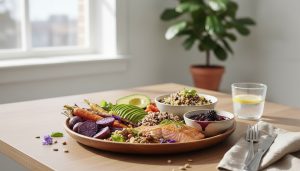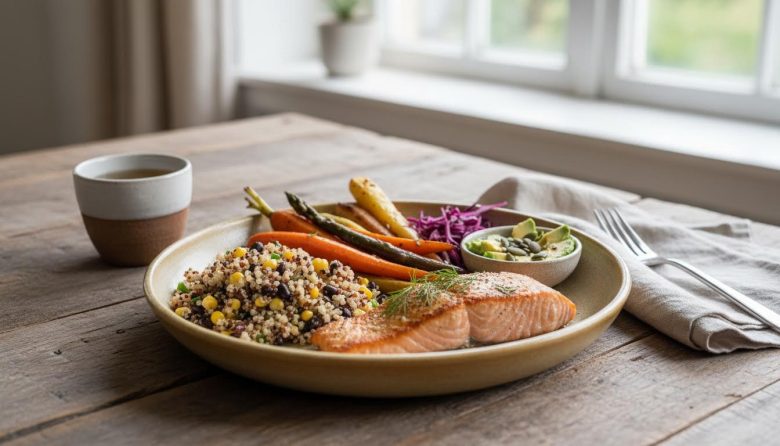
Picture this: it’s 3 p.m., and you’re dragging through emails or shuttling kids to soccer practice, only to hit a wall of fatigue. Busy professionals and families often face this energy slump from unbalanced meals heavy on processed foods. Balanced clean eating plates offer a simple anchor—filling half with veggies, a quarter with proteins, a quarter with whole carbs, and a touch of healthy fats.
Clean eating focuses on whole, unprocessed foods like fresh produce, lean meats, and grains. This approach can help steady your blood sugar and provide sustained fuel. Try building just one plate today and notice how it shifts your afternoon vibe.
Why Balanced Clean Plates Steady Your Energy Through the Day
A balanced clean plate works by combining fiber-rich veggies, proteins, whole carbs, and fats. These elements team up to slow digestion, preventing blood sugar spikes and crashes that often lead to mid-day fatigue. Research shows this synergy supports stable energy for hours.
Protein and fiber together promote satiety, reducing the urge to snack on sugary items. Micronutrients from colorful produce may bolster mood through pathways like serotonin production. Gut health benefits emerge too, as whole foods feed beneficial bacteria.
- Stable energy: Fiber and protein combos slow carb absorption for even release.
- Mood support: Vitamins like B6 and magnesium from whole sources aid neurotransmitter balance.
- Tracking tip: Jot down post-meal energy on a phone note for a week to spot patterns.
This setup tends to align with your circadian rhythm, especially if eaten earlier in the day. Families notice kids staying fuller longer, cutting hangry moments. Experiment with plate ratios and track simple signals like focus levels.
Start with Colorful Veggies as Your Plate’s Foundation
Fill half your plate with non-starchy veggies like broccoli, spinach, bell peppers, or zucchini. These provide volume and fiber without many calories, promoting fullness. Their antioxidants may reduce inflammation linked to daily stress.
Fiber in veggies slows digestion, helping regulate blood sugar alongside other plate components. A variety of colors ensures a range of vitamins for overall vitality. For busy schedules, roasting a sheet pan batch saves time.
What to try:
- Roasted medley: Toss broccoli, carrots, and peppers with olive oil; bake at 400°F for 20 minutes.
- Raw crunch: Cucumber, cherry tomatoes, and leafy greens in a quick salad with lemon dressing.
- Steamed power: Zucchini and asparagus in a microwave steamer for under 5 minutes.
- Frozen shortcut: Steam bags of mixed veggies—ready in 4 minutes, perfect post-workout.
These ideas fit family dinners; kids often prefer milder flavors like carrots. Track how veggie-heavy plates curb afternoon hunger. When building your grocery list, consider 10 budget-friendly clean eating grocery essentials for affordable veggie staples.
Layer in Satisfying Proteins from Whole Sources
Devote a quarter plate to proteins like grilled chicken, turkey, eggs, fish, tofu, or lentils. These support muscle repair and keep you satisfied longer through amino acids. Digestion improves as proteins signal fullness hormones.
Whole sources avoid additives found in processed meats, potentially easing gut load. Plant options like beans add fiber for extra balance. Variations keep meals exciting for repeat eaters.
What to try:
- Grilled chicken strips: Season with herbs, grill 6 minutes per side; slice for salads.
- Baked salmon: 12 minutes at 375°F with lemon—omega-3s for brain focus.
- Lentil patties: Mash cooked lentils with oats, pan-fry for 10 minutes; kid-approved texture.
- Tofu stir-fry: Cube firm tofu, sauté with garlic; ready in 8 minutes.
Families can mix animal and plant proteins for picky eaters. Post-meal, note digestion ease or sustained energy. This layer completes the plate’s synergy for all-day steadiness.
Choose Whole Carbs for Lasting Fuel Without Crashes
Fill the remaining quarter with whole carbs such as quinoa, sweet potatoes, brown rice, or oats. These provide steady glucose via complex structures and fiber. Timing them earlier supports circadian energy peaks.
Unlike refined carbs, whole versions pair with plate fiber to avoid insulin surges. They fuel workouts or mental tasks without the post-carb fog. Batch cooking makes them week-ready.
What to try:
- Baked sweet potato: Microwave 7 minutes, top with cinnamon for natural sweetness.
- Quinoa salad base: Cook 15 minutes, fluff and store; mixes with veggies/protein.
- Brown rice bowls: Pressure cook in 20 minutes for fluffy texture.
- Oat portions: Overnight oats with milk alternative—grab-and-go breakfast plate.
Swapping refined carbs here transforms energy patterns. Track mood dips to refine choices. For seamless integration, explore quick tips for prepping clean eating meals ahead, focusing on carb batches.
Finish with Healthy Fats for Better Nutrient Uptake
Add a small portion of fats like half an avocado, a tablespoon of nuts, seeds, or olive oil drizzle. Fats enhance absorption of fat-soluble vitamins from veggies. They also promote hormone balance and satiety.
Monounsaturated fats may support heart health markers over time. Keep portions modest—about a thumb-sized amount. This final touch rounds out the plate for completeness.
What to try:
- Avocado slices: Creamy addition to protein-veggie base.
- Chia seeds sprinkle: 1 tbsp on carbs for omega boost.
- Almond handful: 10-12 nuts for crunch and staying power.
Safety / when to be cautious: Portions matter if tracking calories; those with gallbladder issues may consult a doctor before increasing fats. Start small and monitor comfort. Families enjoy nut butters thinned for dipping veggies.
Quick Food Swaps to Build Clean Plates Effortlessly
Use these everyday swaps to tweak meals toward balance without overhauling your routine. They visually pair processed picks with whole alternatives, highlighting energy or satiety gains. Track mood or energy after two swaps weekly.
| Common Processed Choice | Clean Whole-Food Swap | Plate Balance Boost |
|---|---|---|
| White rice | Quinoa or brown rice | Fiber synergy steadies blood sugar with proteins |
| Chips or fries | Baked sweet potato wedges | Satiety from skin’s fiber, pairs with dips |
| Deli lunch meat | Grilled turkey or tofu slices | No nitrates, better muscle repair support |
| Processed cereal | Oats with berries | Sustained fuel, micronutrient mood lift |
| Salad dressing packets | Olive oil and vinegar mix | Enhances veggie nutrient uptake |
| White bread sandwich | Leafy wrap with whole grain | Volume from greens curbs overeating |
Pick swaps matching your staples; they fit busy plates. Notice how they elevate overall balance. For more ideas, thinking about how to swap processed foods for clean alternatives simplifies daily tweaks.
Daily Habits and Hacks to Make It Stick
Plate assembly starts with a visual template: divide mentally or use a divided dish. Prep Sundays for weekdays—chop veggies, cook proteins. This cuts decision fatigue for professionals.
- Prep hack: Buy pre-chopped veggies or frozen for zero-waste speed.
- Family tweak: Cut proteins into fun shapes; involve kids in veggie picking.
- Travel tip: Pack portable plates in containers—veggie sticks, hard-boiled eggs, fruit.
- Tracking CTA: Snap plate photos weekly; rate energy 1-10 to refine.
Consistency builds habits; start with dinners. Encourage family buy-in with shared wins like better sleep. Experiment freely—your body’s signals guide adjustments.
FAQ
What’s the difference between clean eating and just eating healthy?
Clean eating emphasizes minimizing processed foods, additives, and sugars in favor of whole ingredients like fresh produce and unrefined grains. It overlaps with healthy eating but focuses more on simplicity and transparency in sourcing. Variations exist, so tailor to what sustains your energy.
Can I create balanced clean plates on a tight budget?
Yes, prioritize seasonal veggies, eggs, beans, and frozen produce for affordability. Bulk grains like oats or rice stretch far. Simple guardrails: Shop perimeter aisles, buy in-season to keep costs under control.
How do I balance plates for vegetarian or vegan diets?
Use beans, lentils, tofu, tempeh, or eggs for protein quarters; quinoa doubles as carb-protein. Ensure variety for complete aminos—mix sources daily. Track energy to adjust portions as needs vary.
What if I travel or eat out—still possible?
Opt for side salads, grilled proteins, and veggie add-ons; skip fries for steamed options. Custom orders like dressing on side work well. Tune into hunger cues rather than plate size for balance.
How soon will I notice benefits from daily clean plates?
Often within 1-2 weeks, many report steadier energy and better sleep. Mood lifts may follow as nutrients accumulate. Individual factors like starting point influence speed—track personal signals patiently.