I still remember my grocery shopping days before I embraced clean eating. I’d wander the aisles, tossing in whatever caught my eye—packaged snacks, sugary yogurts, and mystery meats that promised quick meals but left me sluggish and bloated by afternoon. It was chaos, and my energy tanked. Clean eating changed that by shifting my focus to whole, minimally processed foods like fresh veggies, lean proteins, and simple grains. These choices often support steady energy, better digestion, and fewer inflammation triggers from hidden additives.
Building a simple grocery list makes this shift effortless. In this guide, I’ll walk you through a step-by-step process that takes under 10 minutes each week. You’ll end up with a cart full of nourishing staples that fit your real life, no overwhelm required. Let’s make your next shop a win for your body.
Why Your Grocery List Sets the Tone for Clean Eating Success
A solid grocery list acts like a roadmap for your week. It steers you toward nutrient-dense whole foods that provide vitamins, fiber, and healthy fats your body craves. This consistency can help reduce exposure to processed ingredients that sometimes spike blood sugar or stir up low-grade inflammation.
Why it helps: Whole foods tend to be richer in antioxidants and phytonutrients, which support your body’s natural repair processes. For instance, choosing oats over sugary cereals stabilizes your circadian rhythm by providing slow-release energy. Over time, this may lead to better focus and fewer mid-day crashes.
What to try: First, plan around 3-5 meals you’ll repeat, like veggie stir-fries or egg muffins. Jot down ingredients for those to avoid impulse buys. Track how these choices affect your mood—many find steadier energy after a week.
Core Staples That Form the Backbone of Your Cart
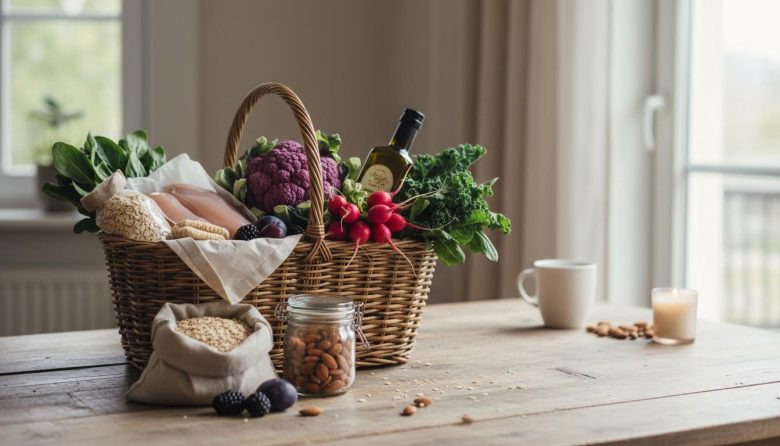
Non-perishables are your clean eating MVPs—they’re versatile, budget-friendly, and last for weeks. Think oats for breakfast porridge, nuts for snacks, and olive oil for dressings. These form the base of batch cooking that saves time on busy nights.
In my kitchen, I always grab rolled oats for overnight jars. A handful of almonds or walnuts adds crunch to salads without the processed oils in many trail mixes. Extra-virgin olive oil drizzles over roasted veggies, delivering heart-healthy monounsaturated fats.
What to try:
- Old-fashioned rolled oats: Store in an airtight jar; use for porridge or baking.
- Mixed raw nuts (unsalted): Portion into bags for grab-and-go; aim for a small handful daily.
- Extra-virgin olive oil: Keep in a cool, dark spot; swap for butter in cooking.
- Quinoa or brown rice: Rinse before cooking; bulk-buy for meal prep sides.
These staples powered my Sunday batch sessions, where I’d cook quinoa salads that lasted through Wednesday lunches. They keep meals satisfying without fuss.
Fresh Produce Picks for Flavor Without the Fuss
Fresh produce brings color and crunch to your plate, often boosting hydration and fiber intake. Opt for seasonal picks to keep costs down and flavors peak. My go-to haul? Five items that prep in minutes: spinach, bell peppers, apples, sweet potatoes, and berries.
Leafy greens like spinach wilt fast, so use them first in smoothies or sautés. Bell peppers add sweet crunch to everything from omelets to rice bowls. Apples and berries satisfy sweet cravings naturally, often curbing the urge for processed desserts.
What to try:
- Spinach or kale: Bag for salads; massage kale to soften.
- Bell peppers (any color): Slice for snacks; roast for sides.
- Apples or pears: Whole for portability; no peeling needed.
- Sweet potatoes: Bake in bulk; top with nuts.
- Berries (fresh or frozen): Blend into yogurt; antioxidants may support recovery.
Safety / when to be cautious: Always wash produce thoroughly under running water to minimize bacteria risks. Pat dry and store in breathable bags. If you’re pregnant or immunocompromised, cook greens to be extra safe.
This simple produce rotation keeps my meals vibrant. Experiment to see what boosts your energy most.
Protein Powerhouses That Keep Meals Satisfying
Proteins stabilize blood sugar, helping you feel full longer and maintain focus. Eggs, legumes, fish, and poultry fit clean eating perfectly—they’re nutrient-packed without additives. Why it helps: These sources deliver amino acids for muscle repair and steady hormone balance.
Eggs are my breakfast hero; scrambled with spinach, they kickstart the day. Canned beans like chickpeas rinse clean for salads. Wild-caught salmon brings omega-3s that may ease joint stiffness for some.
What to try:
- Eggs (pasture-raised if possible): Check for clean shells; boil for snacks.
- Canned beans (low-sodium): Black beans or lentils; drain and rinse.
- Wild-caught fish like salmon: Frozen fillets thaw quick; bake with olive oil.
- Chicken breast or turkey: Organic if budget allows; portion for the week.
These kept me satisfied during long workdays. Pair with veggies from your list for balanced plates.
For more on turning these into ready meals, explore How to Meal Prep Clean Eating for Beginners.
Effortless Swaps to Clean Up Your Pantry Essentials
Small swaps transform your list without a total overhaul. They cut added sugars and refined flours that can sometimes disrupt gut health. Start with one or two; over time, they add up to cleaner habits that feel natural.
These changes often enhance flavor while supporting better digestion. Use the table below as a quick reference next shop.
| Conventional Item | Clean Swap | Why It Helps |
|---|---|---|
| Sugary cereal | Rolled oats | Slow-digesting carbs for steady energy; less blood sugar spikes. |
| White bread | Whole grain sourdough | Fiber aids digestion; fermentation may improve nutrient absorption. |
| Processed peanut butter | Natural nut butter (just nuts + salt) | No added sugars or oils; healthy fats promote satiety. |
| Chips or crackers | Air-popped popcorn or veggie sticks | Lower sodium and calories; crunch without inflammatory oils. |
| Sweetened yogurt | Plain Greek yogurt | Probiotics support gut health; add your own fruit. |
| Bottled dressings | Olive oil + vinegar | Anti-inflammatory fats; control sodium intake. |
Spot these in the aisles and pivot. Your body often thanks you with better mornings.
Assemble Your List in Minutes and Make It Yours
Ready to build? Grab paper or your phone notes app. Start with core staples, add proteins, then produce—aim for 20-25 items total.
Step 1: List 3 meals (e.g., oats breakfast, salmon lunch, bean chili dinner). Step 2: Pull ingredients from sections above. Step 3: Check swaps table; tweak one habit.
Make it yours by noting preferences—like subbing tofu for fish if plant-based. Shop the perimeter first for freshest picks. For label savvy, see How to Read Food Labels for Clean Eating.
CTA: Try this list next week and track simple signals—energy levels, sleep quality, or digestion. Adjust based on what works; small tweaks build lasting wins. Share your tweaks in comments if you’re reading on the site.
Bonus template: Copy-paste categories into notes—Staples: ___, Produce: ___, Proteins: ___. Done in 7 minutes flat.
FAQ
What’s the difference between clean eating and just eating healthy?
Clean eating narrows in on whole, minimally processed foods with fewer additives, while general healthy eating can include more packaged options. Definitions vary, but clean often prioritizes recognizable ingredients. It may help some feel lighter, though personal needs differ.
Can I build a clean list on a tight budget?
Yes—focus on frozen produce and bulk staples like oats or beans, which stretch further. Shop sales for seasonal veggies and generic brands without extras. Regional prices vary, so track what fits your wallet while nourishing you.
How often should I update my grocery list?
Weekly ties nicely to meal planning and keeps things fresh. Update mid-week if surprises pop up, like a craving for berries. Track energy post-shop to refine what serves your rhythm best.
Are there foods I should always avoid?
No absolutes—highly processed items with long ingredient lists often get limited, as they may disrupt gut balance for some. Personal tolerance varies; listen to your body. Focus on adding wholes rather than strict bans.
What if my family won’t eat clean?
Start small with shared staples like oats or apples that everyone enjoys. Sneak veggies into family favorites, balancing preferences with your goals. Over time, they may notice your steady energy and join in—patience wins.
For veggie ideas that please picky eaters, check Top 10 Veggie Swaps for Everyday Clean Meals.