I remember my first week trying clean eating—excited but staring at an empty wallet after buying a bunch of pricey greens and supplements. Turns out, you don’t need fancy superfoods or organic everything to feel better. Clean eating is simply choosing whole, minimally processed foods like fruits, veggies, grains, and proteins that nourish your body without the junk.
This beginner’s guide shows how to do it on a tight budget, often under $50 a week for one person. You’ll get real steps, examples, and a handy table for swaps that save money and boost energy. Sticking around? We’ll cover why it works, staples, planning, swaps, recipes, store hacks, and tracking to make it stick.
Why Prioritizing Whole Foods Pays Off for Your Wallet and Wellness
Whole foods like oats, beans, and seasonal veggies tend to be cheaper per serving than processed snacks. Their nutrient density—packed with fiber, vitamins, and steady carbs—helps stabilize blood sugar, which often curbs cravings and prevents impulse buys at the store.
Take my friend who switched from sugary cereals to eggs and spinach; her mid-afternoon slumps vanished, saving her coffee runs. This approach supports your circadian rhythm by providing sustained energy, not spikes and crashes. Energy from whole foods can help with better sleep and mood over time.
Why it helps: Fiber slows digestion, keeping you full longer and reducing overall food needs. Track your mood and energy for a week on a simple scale of 1-10; many notice steadier days quickly. Experiment with one swap and see how it feels.
Curating Your $20 Weekly Pantry Staples for Easy Wins
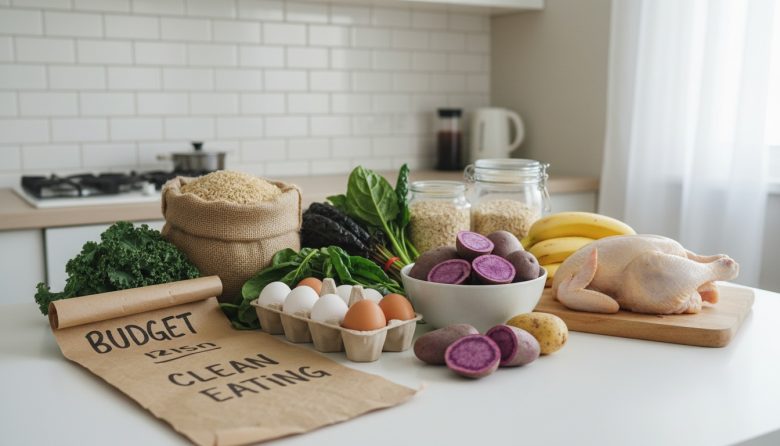
Start with basics that last: rolled oats ($2 bag), dried beans or lentils ($1.50), eggs ($3 dozen), rice or quinoa ($2), canned tomatoes ($1), frozen mixed veggies ($2), peanut butter ($3), and bananas or apples ($2). This haul covers breakfasts, lunches, and sides for days.
I keep these in my pantry because they’re versatile and shelf-stable, cutting waste. Soak beans overnight for free protein that beats pricey meat. One pot of lentils feeds me twice, with leftovers for tomorrow.
Shop the outer aisles or bulk bins for deals. These staples build meals without recipes feeling like work. Pair them with tips from 7 Tips to Make Clean Eating Affordable Daily for even bigger savings.
Streamlined Meal Planning That Fits Real Budgets and Schedules
Begin Sunday with a 30-minute plan: list 3 dinners using staples, like lentil stew Monday, egg fried rice Tuesday, bean salad Wednesday. Focus on seasonal produce—it’s often 30% cheaper and fresher. Batch cook rice or beans to cover multiple meals.
Example weekly plan under $50: Breakfasts (oats with banana), lunches (leftover stew), dinners (veggie stir-fry, eggs with greens), snacks (apple with PB). This saves $20 weekly versus takeout. Adjust for your crew by doubling staples.
What to try: 1) Theme nights like “Meatless Monday” with beans. 2) Freeze portions for busy weeks. 3) Use a phone app for sales alerts. 4) Prep dressings ahead to avoid eating out. Track fullness after meals to refine.
Budget Food Swaps for Everyday Meals
| Common Choice | Clean Budget Swap | Avg. Cost Savings (per serving) | Why It Helps |
|---|---|---|---|
| Processed cereal | Oats + banana | $0.50 | Fiber for steady energy, fewer crashes |
| Store-bought chips | Baked potato slices | $0.75 | Potassium balances electrolytes, satisfies crunch |
| Pre-made salad kit | Canned beans + cabbage | $1.20 | Protein keeps you full, anti-inflammatory |
| Chicken nuggets | Lentil patties | $1.00 | Iron for oxygen flow, plant fiber aids gut |
| Bottled dressing | Oil + vinegar + herbs | $0.40 | Healthy fats support hydration, no additives |
| Granola bar | Apple + peanut butter | $0.60 | Natural sugars with protein for lasting fuel |
| Instant noodles | Rice + frozen veggies + egg | $0.80 | Vitamins from veggies aid stress response |
These swaps use what’s already cheap and available. Adapt by checking local prices—frozen often beats fresh for savings. They maintain flavor while cutting hidden sugars.
Start with two per week; your grocery bill drops fast. Notice how they support hydration and steady moods too.
Quick Recipes Spotlighting Affordable Seasonal Produce
Lentil Soup: Rinse 1 cup lentils, simmer with onion, carrot, canned tomatoes, spices 25 minutes. Serves 4 for $1.50 each. Add greens at end for vitamin boost.
Veggie Stir-Fry: Heat oil, toss frozen broccoli, bell peppers, garlic; add cooked rice and soy sauce alternative. Ready in 15 minutes, $2 per bowl. Balances plate with carbs and veggies.
Overnight Oats: Mix oats, milk alternative, yogurt, apple chunks; fridge overnight. Grab-and-go breakfast under $0.75. Fiber helps morning digestion.
Bean Salad: Drain chickpeas, chop cucumber, tomato, onion; dress with lemon-olive oil. Prep ahead for lunches, $1.20 serving. Protein stabilizes energy.
Safety note: Check for allergies like nuts or beans; start small. Aim for balanced plates—half veggies, quarter protein, quarter grains—to avoid nutrient gaps. When to be cautious: If pregnant or diabetic, tweak portions and consult a doc.
Grocery Store Strategies to Maximize Value Without Sacrifice
What to try: 1) Hit bulk bins for grains and nuts—scoop only what you need. 2) Choose frozen produce; it locks in nutrients and costs less. 3) Compare unit prices, not pack size.
Example $25 haul: 5 lbs potatoes, 2 lbs onions, bag carrots, frozen spinach, dozen eggs, oats, beans, rice. Lasts a week with planning. Shop midweek for markdowns on near-expiry items.
Another hack: Grow herbs on windowsill for free flavor. Link frozen options to ideas in 15 Clean Eating Snacks That Keep You Satisfied. Safety: Check dates to avoid waste; freeze extras promptly. When cautious: Skip if immunocompromised and pick sealed packs.
For eating out tweaks, see 5 Tips for Clean Eating When Eating Out.
Sustaining Momentum with Simple Tracking and Tweaks
Journal daily: “Energy level? Fullness after lunch? Cravings?” Adjust based on patterns, like more protein if dragging. I did this my first month—swapped rice for quinoa once and felt sharper.
Weekly review: What saved most money? Tweak one thing, like bigger veggie batches. This builds habits without overwhelm.
Celebrate small wins, like steady moods. Track sleep too; whole foods often improve it via better nutrient balance.
Frequently Asked Questions
Can clean eating fit a tight grocery budget?
Often yes, with smart swaps and planning—it can cut costs by 20-30% versus processed foods. Focus on staples like beans and oats, which are cheaper long-term by reducing snacks. Track your receipts for a month to see personal savings; variation depends on location.
How do I start without overhauling everything?
Swap one meal daily, like breakfast oats for cereal. Build from there with a $20 staple list. This gradual approach respects your schedule; many feel benefits in energy within days.
What’s the best way to handle cravings on a budget?
Pair fiber-rich snacks like apple with PB—they satisfy via steady blood sugar. Drink water first, as thirst mimics hunger. Prep 15 Clean Eating Snacks That Keep You Satisfied ahead; adjust based on your triggers.
Are frozen foods okay for clean eating?
Absolutely, if minimally processed—no sauces or breading. They retain most nutrients and save money. Steam or stir-fry to keep it simple; guardrail: read labels for additives.
How soon will I notice benefits?
Many report better energy and fewer cravings in 3-7 days from stabilized blood sugar. Full effects like improved sleep may take 2 weeks. Track your signals—mood, digestion—and tweak; bodies vary.
Try one swap this week, note your energy levels, and build from there. You’ve got this—small steps lead to big changes.