Ever open your fridge and sigh at the takeout containers, expired yogurt, and half-empty chip bags? I know that feeling all too well. A few years back, my kitchen was a chaos zone—think sugary cereals for “quick breakfasts,” sodas lining the door, and mystery condiments forgotten in the back. I felt sluggish, craving junk constantly, until I decided to restock for clean eating.
One weekend purge and smart swap later, everything changed. Suddenly, whipping up nourishing meals felt effortless, and my energy soared through the afternoons. No more mid-day crashes; just steady focus and fewer hanger moments. Simple changes like swapping chips for nuts made healthy eating accessible, even on my busiest weeks as a mom and freelancer.
This guide walks you through stocking your kitchen step-by-step, from purging junk to building a rainbow of staples. You’ll get practical lists, why-they-work explanations, and real-life tips I’ve tested. Grab a notebook or your phone notes app for a grocery list as you read—your future self will thank you. Let’s make clean eating your kitchen’s new normal, one shelf at a time.
Purge Before You Stock: Clearing Space for Real Food
Start with a full kitchen reset to make room for wholesome foods. I remember my first purge: two trash bags full of processed snacks and faded labels. It took about an hour, but seeing clear shelves motivated me to fill them right.
Begin by emptying one area at a time—fridge door, pantry shelves, freezer. Check every item’s expiration date and ingredients list. This creates mental space too, signaling a fresh start.
Focus on ultra-processed foods like those with long ingredient lists full of chemicals you can’t pronounce. Toss or donate what doesn’t align with clean eating. You’ll notice fewer temptations right away.
Why it helps
Clearing out ultra-processed items often reduces hidden sugars, artificial additives, and preservatives. These can trigger cravings by messing with blood sugar and gut signals. Studies show less exposure tends to ease overeating urges over time.
Your kitchen becomes a supportive environment. Steady energy follows as your body adjusts to real foods. I felt lighter within days, with fewer snack attacks.
What to try
- Check labels for added sugars over 5g per serving—toss those granola bars and sauces.
- Discard expired items and mystery condiments gathering dust.
- Donate unopened non-perishables to a food bank if they’re not clean.
- Scan for trans fats, artificial colors, or high-fructose corn syrup culprits.
Safety / when to be cautious
Go slow if family members have different habits—talk it over to minimize waste. Involve kids in the process for buy-in. If you have dietary restrictions, double-check labels before tossing.
Build a Rainbow of Fresh Produce Staples
Next, prioritize veggies and fruits that store well and add color to every meal. My go-to rotation includes kale for salads and sweet potatoes for roasting—they last weeks in the crisper. This section keeps your fridge vibrant without daily shopping trips.
Aim for variety: half your plate produce at each meal. Pre-washed bags save time on busy evenings. Frozen options bridge gaps when fresh runs low.
Incorporate them into smoothies or sides. For tasty ideas, explore how to make tasty clean eating smoothies that hide greens kids love. Stocking this way made my meal prep a breeze.
Why it helps
Fiber-rich produce supports steady energy by slowing digestion and stabilizing blood sugar. Antioxidants from colors fight everyday inflammation gently. A diverse intake often improves mood via gut-brain links.
What to try
- Leafy greens like kale and spinach in pre-washed bags for salads.
- Cruciferous veggies: broccoli, cabbage for steaming or stir-fries.
- Roots like carrots and sweet potatoes—roast for natural sweetness.
- Berries and citrus for antioxidants and vitamin C boosts.
- Apples and avocados as grab-and-go snacks that hold up well.
Pantry Heroes: Grains, Nuts, and Spices That Last
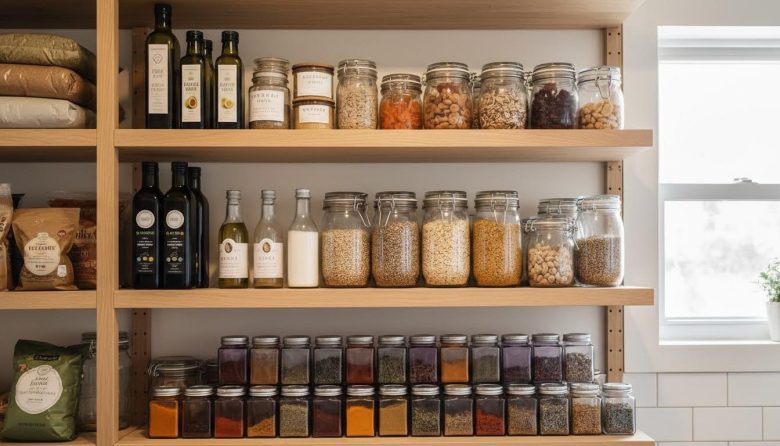
Build a versatile pantry with long-shelf-life items for base meals anytime. Quinoa became my staple after ditching white rice—cooks fast, fills you up. Spices elevate basics without salt overload.
Store grains in airtight containers to keep them fresh months. Nuts in moderation add crunch. These form the backbone of quick bowls or sides.
Pair with proteins for balanced plates. When planning weeknights, these shine in 10 simple clean eating meals for weeknight dinners.
Why it helps
Whole grains offer sustained fuel via complex carbs, avoiding blood sugar spikes common with refined ones. Nuts provide healthy fats that signal fullness. Spices like turmeric may support anti-inflammatory responses mildly.
What to try
- Quinoa, rolled oats, brown rice for bases.
- Raw nuts and seeds: almonds, chia for toppings.
- Spices: turmeric, cumin, garlic powder for flavor depth.
- Canned beans like black or chickpeas, no added salt.
Protein and Fat Picks for Satiety
Choose quality proteins and fats to stay full longer between meals. Eggs are my breakfast hero—versatile and affordable. Tofu works great for plant-based days.
Opt for grass-fed or wild-caught when possible, but everyday options count most. Greek yogurt with berries curbs sweet cravings naturally. Keep portions balanced to avoid excess.
These picks pair well with produce for complete meals. Track how they affect your hunger cues.
Why it helps
Lean proteins and healthy fats help regulate hunger hormones like ghrelin effectively. They promote muscle repair and steady energy. Combining them often enhances meal satisfaction.
What to try
- Eggs for boiling or scrambling daily.
- Wild-caught fish like salmon, frozen for ease.
- Tofu or tempeh for stir-fries.
- Nut butters with just nuts and salt.
- Grass-fed meats in moderation.
- Full-fat Greek yogurt plain.
Hydration and Flavor Boosters Without the Sneaky Sugars
Stock drinks and condiments that enhance without sabotaging. Sparkling water with lemon replaced my diet sodas instantly. Fresh herbs make everything restaurant-worthy.
Avoid anything with hidden sugars in “healthy” drinks. These keep flavors exciting minus the crash. Use for dressings or marinades.
Especially useful when eating out, as they inspire home versions of favorites.
Why it helps
Plain options support hydration without disrupting appetite signals from sugars. Acids like lemon aid digestion mildly. Herbs add variety, curbing boredom.
What to try
- Sparkling water and herbal teas like peppermint.
- Apple cider vinegar for dressings.
- Mustard, tamari low-sodium.
- Fresh herbs: basil, cilantro; lemons and limes.
| Common Item to Limit | Clean Swap | Why Swap? |
|---|---|---|
| Sugary cereal | Rolled oats with fruit | Sustained energy, less sugar spike |
| Potato chips | Air-popped popcorn or roasted chickpeas | More fiber, fewer processed fats |
| White bread | Whole grain or sprouted options | Better nutrient density |
| Store-bought dressings | Olive oil + vinegar + herbs | No hidden sugars or preservatives |
| Soda | Sparkling water with lemon | Hydrates without empty calories |
| Flavored yogurt | Plain Greek yogurt + berries | Protein boost, natural sweetness |
| Instant noodles | Quinoa or brown rice bowls | Whole grains for fullness |
| Candy bars | Dark chocolate >70% + nuts | Antioxidants, controlled portions |
This table simplifies decisions at the store—glance and swap. I laminated a copy for my fridge door. It cuts shopping time and reinforces habits visually.
Around swaps, notice how they align with sections above: grains for cereals, produce for yogurts. Experiment one swap weekly. Track energy shifts to see what sticks for you.
Visual aids like this make clean eating less overwhelming. Families adapt faster seeing options side-by-side.
Track Your Wins and Tweak as Needed
After stocking, build weekly habits like Sunday restocks. Log simple signals: energy levels, mood, sleep quality post-meals. I use a phone app for quick notes.
Tweak based on what works—maybe more frozen berries if fresh spoil. Experiment with portions for satiety. Consistency brings the real rewards, like effortless healthy choices.
Encourage family input for sustainability. Small wins compound over months.
FAQ
How do I start on a budget?
Focus on affordable staples like oats, eggs, and frozen produce—they stretch far. Buy grains and nuts in bulk from warehouse stores for savings. Track what your family actually eats to avoid waste; start with 3-5 swaps per shop. This keeps costs low while building momentum.
What’s one must-have for beginners?
A good extra-virgin olive oil—it’s versatile for dressings, sautéing, and roasting. It may enhance absorption of fat-soluble vitamins from veggies. Store in a cool, dark spot to preserve qualities.
How often should I restock produce?
Twice weekly for peak freshness, especially greens and berries. Supplement with frozen veggies that match nutrition without spoilage worries. Adjust based on your household size and meal plans.
Can kids adapt to this?
Often yes, especially with gradual swaps and their involvement in shopping. Involve them in picking colorful produce or blending smoothies. Watch for pickiness, offering familiar formats like yogurt parfaits first.
What if I slip up?
No big deal—clean eating is about progress, not perfection. Refocus at your next shop and note what triggered the slip, like stress. Track simple signals like fullness or energy to stay motivated.